PORTSMOUTHPOINT

  • Subscribe to our RSS feed.
  • Twitter
  • StumbleUpon
  • Reddit
  • Facebook
  • Digg
Showing posts with label History. Show all posts

Thursday, July 11, 2013

History of the “Rock Opera”

Posted on 1:35 AM by Unknown
Part 3 of 3 rock opera-related articles by Tim Bustin

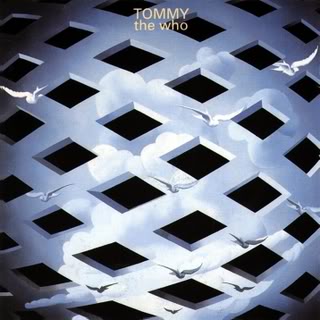
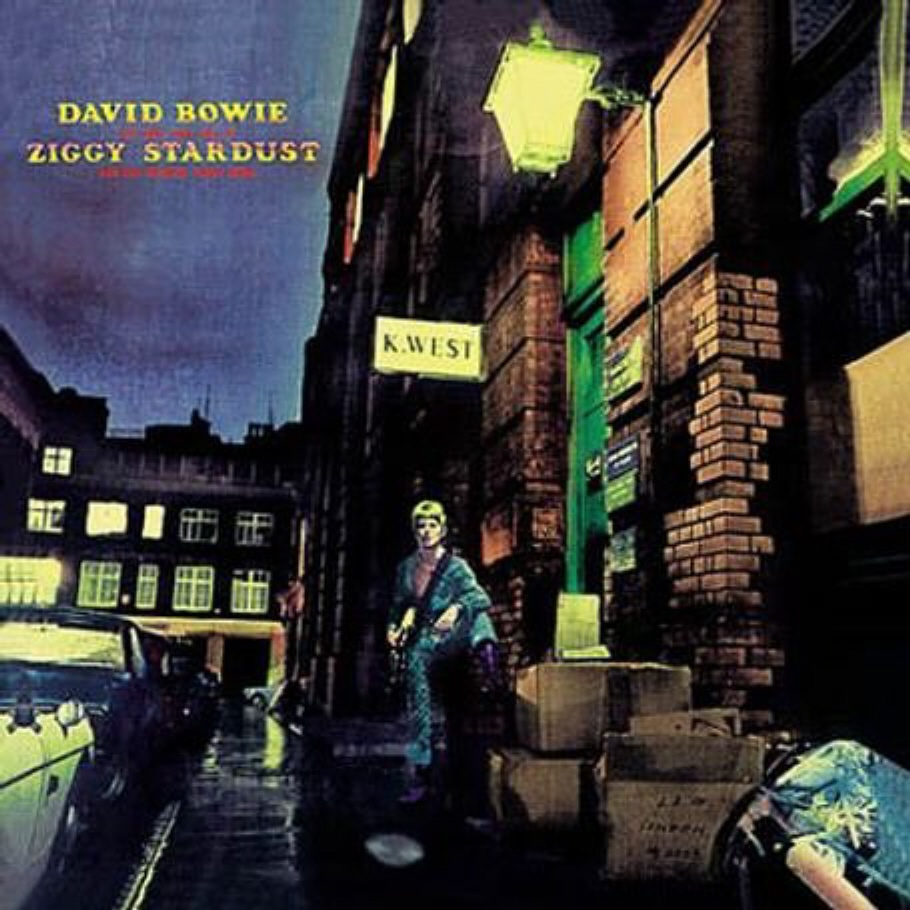
The term itself sounds like an oxymoron, implying both a combination of “cool” and pretension (whilst also not clarifying what on earth it is). David Bowie’s (The Rise and Fall of)  Ziggy Stardust and the Spiders From Mars, The Who’s Tommy and Quadrophenia, Green Day’s American Idiot, Jesus Christ Superstar, Pink Floyd’s The Wall – indisputable classics all of them, and each structured around some epic tale – music, exploited in its induction of emotions, used in connection with the lyrics to tell a story.


The term opera brings to mind vast theatres, over-singing and several large dollops of pure boredom, but really it’s a term used to describe where a (usually long) piece, or collection of musical pieces, are used as a way of storytelling. Way back in 1966, the story goes something like this: The Who’s lead guitarist and primary songwriter, rock legend Pete Townshend, was joking around one evening with one of the band’s managers, Kit Lambert (son of Constant Lambert, the composer) and some friends, listening to all sorts of different rubbish music, when, fairly drunk, a comedy song made someone shout out “It’s rock opera!”


Quite surprisingly, one bout of hysterics later, Kit remarked “That’s not a bad idea” So, in order to fill a missing nine minutes at the end of their 1966 A Quick One album, the world’s first rock opera emerged – A Quick One While He’s Away, the mini rock opera. It’s a rather strange story, about infidelity between a forlorn girl guide and an engine driver named Ivor. Yeah, I know. And of course, being at that difficult second album stage, they just said “cello” over and over again to save money on hiring a strings section. It’s a pretty good song actually, despite certain, unimportant, details. Split into six sections, it’s a fast moving tale of love, emotion, youth, sex, and ultimately forgiveness. Not necessarily a noble start for this well-used song/album format, but, trust me, it gets better.


The Who tested the mini-rock opera idea again on their third album, The Who Sell Out. At this time, finance was an issue, and apparently the band’s rhythm section (if it can be called that), drumming icon Keith Moon and hugely influential bassist John Entwistle, were flirting with the idea of going off and joining this new band called (christened by Moon) "Led  Zeppelin". Townshend meanwhile was becoming obsessed with the idea of a rock opera album. Tommy is a complex and compelling story dealing with murder, trauma, bullying, child abuse, sex, drugs, illusion, delusion, altered consciousness, spiritual awakening, religion, charlatanism, success, superstardom, faith, betrayal, rejection and pinball.


A young boy, born as WW1 concludes with his father missing in action, becomes deaf, dumb and blind when he witnesses his returning father murdering his wife’s new lover. The boy’s parents attempt to cure his psychological issues, as Tommy lives in a vibration world, reaching a sort of enlightenment. Finally cured, after abuse which he never knew occurred, he tries to teach others of his ways, though is ultimately rejected, due to human propensity for greed and their inability to sacrifice desires. Now, granted, it sounds more pretentious than forty years of Yoko Ono, but the brilliance of Tommy is that the lyrics never detract from the power of the music: Roger Daltrey’s singing verges between beauty and ferocity, Moon’s drumming is as hell-bent as ever, whilst Townshend’s sublime guitar with matching Entwistle bass produces an album of supreme quality, which turned The Who’s fortunes around overnight, established Townshend as a composer, not a mere songwriter, and paved the way for others to create classic albums. (Tommy is 96th on Rolling Stone’s 500 Greatest Albums of All Time list).


This was in 1969, and it was only next year when the album version of Jesus Christ Superstar (by Andrew Lloyd Webber and Time Rice) was released (turned into a stage production in 1971). But it was when David Bowie decided to attempt launched his own rock-opera masterpiece, with his outrageous alter-ego Ziggy Stardust that the rock opera really kicked off. Bowie’s “Ziggy” character is iconic to say the least; flamboyantly dressed and sexually promiscuous. It was Bowie’s lust for fame and attention that allowed such a creation to exist, and to give the character extra depth, the story of Ziggy Stardust was written – a ludicrous, “far out” idea, Ziggy is the messenger for inter-dimensional beings, getting out his ideas through the medium of rock and roll, in a time where people have lost hope and faith, with the ending of Earth being nigh due to man’s exploitation of the world’s resources. Eventually, the travelers (or “infinites”) arrive and take pieces of Ziggy to better integrate with human beings, killing him. Parallels with Tommyare obvious – worship, suffering, the hero’s downfall – yet the music is nowhere near, except in genre. Bowie’s rock songs sometimes sound mild, though the overall product is of course fantastic, with that same distinctive voice carrying the tunes, a solid backing band producing music that’s hard to not want to hear. And now, rock opera had two amazing, equally accomplished, pieces of work, and it had been proved that this genre could be used for great results. (The Rise and Fall of Ziggy Stardust and the Spiders From Mars is 35th on Rolling Stone’s 500 Greatest Albums of All Time list).


1973 saw The Who, now fathers of a new genre, release their second rock opera, Quadrophenia. It’s a part documentary of 1960s Mod culture (exploring its fashions, ideals, “way of life”), told through the life of a young Mod named Jimmy, struggling to adhere to the rules of his lifestyle, fighting with rival gang the Rockers, while he attempts in vain to find love and discover who he truly is amongst his four-way personality split (each personality representing a member of The Who – hence he is quadrophenic). The music is vastly complex, the two 6-minute instrumentals, for example, being combinations of the four themes of Quadrophenia (leitmotifs), conjuring imagery to fit the parts of the story with intense effect, whilst the other 15 songs swing wildly from hard rock to sweet-sounding depression. Townshend himself regarded it as his finest work and Quadrophenia is arguably better than Tommy, though less influential. Both were turned into films, with 1975’s artsy Tommy film, starring a whole host of famous actors and musicians, while 1979’s Quadrophenia film became a cult classic, as an accurate look at 1960’s Britain via Jimmy’s struggle to fit by being an individual. (Quadrophenia is 267th on Rolling Stone’s list; for more information on Quadrophenia, read my review of the recent concert at the O2, or check out this term’s 'Fight Club' issue of Portsmouth Pointmagazine.


So many albums in the rock opera format have been released now, it’s hard to keep track. The next notable one was in 1979, Pink Floyd’s The Wall (87th on Rolling Stone), looking at the barrier that exists between audiences and musicians, and the hits “Comfortably Numb” and “Another Brick In The Wall (part 2)” were spawned. From here albums weren’t hugely successful, and whilst concept albums were rife, it wasn’t until 2004 that we saw a re-emergence of opera in rock form. American Idiothas a sound that couldn’t be further from pretension, even if it’s lyrics are politically motivated, but Green Day’s creation is in every respect a punk masterpiece – from the simple beauty of “Wake Me Up When September Ends” to the raw chords of the title track; the punchy “Holiday” to the ten minute epic “Jesus of Suburbia” and of course the classic “Boulevard of Broken Dreams” – every second is power or serenity. It’s interesting to note how similar the album is to the two Who rock operas – the tale is of an anti-hero Jesus of Suburbia (an opposite Tommy?), hating and confused by life (like Jimmy), meets punk revolutionary St. Jimmy (definite reference), who eventually dies metaphorically, representing that loss of ideals for JoS’s mind. The album is obviously Who-inspired and is utterly brilliant to listen to (225th on Rolling Stone).


Despite Green Day’s second rock opera, the much softer, yet still primarily punk based, 21st Century Breakdown being successful, American Idiot is, so far, the last rock opera “great”. It seems unquestionable that eventually someone else will follow suit and give the world another rock opera, though it may be in the form of a punk or metal rock opera, or another yet untested form. But to a genre, really a sub-genre, which is normally unheard of or not understood, there have been an amazing number of staggeringly brilliant albums produced. It’s a chance for the lyrics to become important, for musicians to become storytellers and to show their opinions through something more powerful than words alone – to fuse a tale, a lyric, an idea, with truly expressive music and create something so powerful, and something that is much more of a statement than the sum of its carefully constructed story, and of its, in whatever style, emotive and wonderful music.
Read More
Posted in Blog Exclusive, History, Music | No comments

Friday, May 31, 2013

The Mary Rose Sails Again

Posted on 9:25 AM by Unknown

A new museum housing Henry VIII's flagship, The Mary Rose, was officially opened to the public today at Portsmouth's Historic Dockyard. Built in 1510, the ship sank in the Solent during a battle against a French invasion fleet in 1545, as Henry VIII watched from Southsea Castle; of the 500 crew members only 35 survived. 

The Mary Rose was raised from the seabed in 1982, along with thousands of artefacts many of which (from cannon to surgical equipment to the ship's bell) are on display at the museum. Faces of many of the crew members have been reconstructed using skulls found with the wreck. Interactive features include video games recreating the Battle of the Solent and a simulator that enables you to try out your archery skills.


Photographs: James Burkinshaw
Read More
Posted in Blog Exclusive, History, Photography | No comments

Tuesday, May 28, 2013

"The Twentieth Century Incarnate": Rite of Spring

Posted on 11:33 PM by Unknown
On May 29, 1913, the premiere of 'Le Sacre du Printemps' (The Rite of Spring), by a young Russian composer, Igor Stravinsky, caused a riot in Paris among many audience members who saw this revolutionary new work as "a blasphemous attempt to destroy music". 

However, 'Le Sacre du Printemps' became extraordinarily influential almost from the beginning and, one hundred years after its first controversial performance, remains one of the most frequently recorded and performed musical works in the world (see video below). Today, American radio station WQXR presents Rite of Spring Fever, a 24-hour marathon of different interpretations of Stravinsky's masterpiece.

"Its theme was elemental, the rejuvenation of earth in spring. The form was a celebration of pagan rites in which a sacrificial maiden dances herself to death to renew the life of the soil.

He opened not with a bang, as Richard Strauss had advised, but with a slow trembling of woodwinds as if to suggest the physical mystery of budding. As the curtain rose on tribal games and dances, the music became vibrant and frenetic, with primeval rhythms, the chant of trumpets, the driving beat of machinery, jazz metres and pitiless drums never before used with such power and abandon. It rose in intensity and excitement to a blazing climaz and all the promise of a new age. It was the Twentieth Century incarnate. It reached at one stride a peak of modern music that was to dominate later generations. It was to the Twentieth Century what Beethoven's Eroica was to the Nineteenth, and, like it, never surpassed.

The premiere, conducted by Monteux on May 29, 1913, created a riot in the theatre. The abandonment of understood harmony, melody and structure seemed musical anarchy. People felt they were hearing a blasphemous attempt to destroy music as an art and responded with howls and catcalls and derisive laughter. Counter-demonstrators bellowed defiance. One young man became so excited he began to beat rhythmically with his fists on the head of an American in the audience whose own emotion was so great that "I did not feel the blows for some time." A beautifully gowned lady in a box stood up and slapped the face of a man hissing in an adjoining box. The composer Saint-Saens indignantly rose and left the hall; another composer, Ravel, shouted, "Genius!"

The dancers could not hear the music above the uproar and Nijinsky, who had choreographed the ballet, stood in the wings pounding out the rhythm with his fists and shouting in despair "Ras, Dwa, Tri!" Monteux threw desperate glances to Diaghilev, who signed to him to keep on playing and shouted to the audience to let the piece be heard. "Listen first, hiss afterwards!" screamed Gabriel Astruc, the French manager, in a rage.

When it was over, the audience streamed out to continue their battle in the cafes and the critics to carry it to the press, but, as the music had hardly been heard, opinion was largely emotion. Not until a year later, when the music was played again in Paris as a concert in April 1914, was it recognised for what it was.

(from Barbara Tuchman, The Proud Tower: A Portrait of The World Before the War (1890-1914)


Alex Ross: "It may not be entirely a coincidence that the centennial of the Rite of Spring scandal follows closely upon the Wagner bicentennial. At last fall's "Reassessing the Rite" conference, which I covered for The New Yorker, Annegret Fauser brought up the Wagner-Rite relationship, noting that in the weeks leading up to the première the French papers had been full of Wagneriana, including accounts of the legendary Tannhäuser riot at the Opéra in 1861. In a way, Fauser suggested, Paris audiences may have been primed to restage that affair: Stravinsky would be the new Wagner, the foreign musician of the future. It's a fascinating speculation — although, of course, Parisian audiences needed little historical prompting to go into culture-riot mode. Nijinsky's suggestive dancing in Prelude to "The Afternoon of a Faun" had set off a brouhaha the previous year."


The opening of 'Le Sacre du Printemps':

Read More
Posted in Blog Exclusive, History, Music | No comments

Wednesday, May 22, 2013

Why Are We Still So Fascinated by the Samurai?

Posted on 12:35 AM by Unknown
by Ross Watkins


Scene from Akira Kurosawa's The Seven Samurai
(on which The Magnificent Seven
and (strangely) Bug's Life were based).
Plunging his sword into his abdomen he makes cuts from right to left tearing his inner intestines, all this done while in extreme pain. Then once he has endured enough, the second will behead the man leaving a small stand of skin so the head does not hit the ground and cause dishonour. All this done to uphold the honour of one so that their family does not fall out of favour with their lord. This was the ancient ritual of sacrifice called Seppuku (or stomach cutting).
To you and me, this may seem barbaric, but to those involved it was a process which was extremely sacred and was done willingly when they had been captured by the opposition or had been ordered to do so by the Emperor.
The Samurai were the warrior elite of Japan from 660 BC 1876 AD (when the Emperor made the wearing of swords illegal). They were seen as a superior class of people to the peasant farmers and the merchants and they had the authority to end a person's life if they suspected that they were dishonouring them.
So how did these warriors gain such power? Japan had a feudal system just like that of Europe. The whole country was ruled by two people: the Emperor, who was the head of state and spiritual leader, the symbol of Japanese power. There also was the  Shogun who was the warrior leader of Japan who was in charge of running the country. But this position of Shogun was hotly contested, with many people trying to overthrow the current Shogun at any one point of time.
This led to eras like the time of the warring states in which Japan was engulfed in civil war for nearly two hundred years. Japan had many different kingdoms which were each ruled by a dynamo, who were the lords of each area- like a lord of the manor in the Middle Ages. The dynamo then employed an army made up of skilled warriors: the samurai.
The samurai are often famed in popular culture for their weapons and fighting style. The sword of the samurai or katana is seen by many as the ultimate weapon available to a warrior in the middle ages. This is due to the myths which have been created around it. One myth which I must rule out now is that most of the katanas could slice through a human body in one, which I believe creates the vision of a super-soldier in a blood-lust craze decapitating a person with once strike. The truth was much more morbid; the sword was sharper than needed to easily pierce flesh and therefore could easily slice through flesh but it would normally be stopped when meeting bone, which would leave a half severed body with entrails spewing out, which was presumably not a pleasant sight.

However, the sword was a work of art, perfectly balanced towards the handle so that the fighter could skilfully place his blade. Also, blades were curved so that the owner could draw the blade and slice down his enemy in one move for that was the style of fighting which the samurai favoured; their fighting style was based on making as few moves as possible and being the first to cut the opponent down, this sequence of events often preceded by the two men shouting their names at each other, supplemented by the shouting of "Heritage", meaning that they were showing their family prowess and honour. As a result, battles were very well organised affairs with individual duels happening in spaces across the battlefield.
Death from afar, splintered wood comes raining down from the sky in a never ending torrent of death: the lesser-known samurai weapon, the bow. The bow was the weapon of choice for many samurai. This is due to the skill required to use such a weapon; it was a delicate weapon, which, unlike the English longbow, was balanced off the centre to stop all the force affecting the aim of the bearer.  This meant that a samurai could find their victim and kill them with ease from a great distance, killing in what was perceivwed as a dishonourable way.
So why do the samurai remain of such interest today? I believe this is due to a plethora of factors, one of which is the way the samurai have been portrayed in films such as The Last Samurai; these films have helped show the modern generation what the samurai were like, albeit in a glorified way, and have helped their image survive through the generations, I also believe that the whole character and honour which comes with the samurai is addictive to many historians and this, I believe, is why the samurai will live on into the future
Read More
Posted in Blog Exclusive, History | No comments

Monday, May 20, 2013

Farewell, Mighty Ark

Posted on 11:37 AM by Unknown
Alongside hundreds of other Portmuthians this afternoon, Tony Hicks bade farewell to aircraft carrier and former flagship of the Royal Navy, HMS Ark Royal (known as "The Mighty Ark"), as she departed Portsmouth on her final voyage.  

All photographs taken by Tony Hicks


Read More
Posted in Blog Exclusive, History, Photography | No comments

Thursday, April 25, 2013

Film Review: Argo

Posted on 11:45 PM by Unknown
by Will Hine


(source: fact.co.uk)
Set in the dusty capital of 1980’s Iran, Ben Affleck’s Argo is a gripping account of the extraction of US diplomats from an extremely hostile part of the world. With a deep historical context, Argo sets the scene with an introduction briefing the audience on the history of the nation. A time and part of the world ravaged with an overturned throne, an aggravated, politically disillusioned populous with a great hatred of the United States Argo sets the hostility of the scene using technique to place the audience with the 6 diplomats, smothered by the crowds of the grand bazaar, for instance. Tony Mendez (Ben Affleck) is an ex-fil agent working for the CIA, and upon the storming of the US embassy in Iran by an enraged mob, he must devise a plan to extract the US citizens from the Middle East without getting caught; with failure being an embarrassing international incident for the United States, as well as the deaths of Mendez and the stranded diplomats. Perhaps the more gripping angle of the story is that it is based on a real-life case, declassified by Bill Clinton in 1997.

Affleck’s attention to detail is paramount in Argo, and benefits the quality of the picture tremendously. From the vintage Warner Bros. logo in the opening title, to Mendez’s eureka moment coming from watching grainy footage of Battle for the Planet of the Apes with his son on a bulky television set, it does a tremendous job to immerse the audience into 1979/80. The footage of the classic sci-fi flick is not the only testament to 70’s film. The clutter of sci-fi memorabilia in his son’s room perhaps nods to an audience member with fond childhood memories of a similar scene. It can be noted that Argo sits so well into 70’s Americana that it could quite easily fit into the period of film itself. Everything from music to questionable facial hair is accounted for in Argo.

(source: Daily Telegraph)
During scenes in Tehran, the Iranian capital, the gripping narrative is coupled with some memorable set pieces, including a nervy, hair-raising scene in the Grand Bazaar as well as the interrogation by a paranoid Iranian militia officer at the international airport. It’s real edge-of-the-seat cinema; a gradual build up is countered by the blind panic and rush of the final third of the film leading to an explosive conclusion.

A neatly executed antidote to an otherwise serious film, aspects of Argo include comedic value. From Mendez’s mixing with Hollywood filmmakers, several jokes are made making general assumptions of Hollywood as a whole; it’s clear these have comical significance to those within the industry but these are appreciated by the viewer, too. The dry humour of the co-operating Hollywood industry man Lester Siegel (Alan Arkin) in coming up with the groups’ in-joke, ‘Argof***yourself’ gives the film not only a lively personality but a likeable one also.

At times, the plot can seem a little too good to be true, and that’s because it is. As mentioned in the opening, Argo is ‘based’ on a true story. It wouldn’t be a Hollywood film if it didn’t have its historical inaccuracies (Braveheart…), but ignoring this fact the film conveys a strong narrative and moreover brings this feat of American engineering to the world. During the credits of Argo, real pictures from the time are set next to their in-movie parallel stills; this has been put in place to ensure the audience understands the shocking reality of what really went on in the Iranian capital.

Overall, Argo is a white-knuckle thriller with an engaging script, a hard-hitting context and a tense storyline, whilst keeping its feet firmly on the ground with elements of comedy. Argo is an immensely enjoyable picture and sets a new benchmark for Ben Affleck’s career in directing.
Read More
Posted in Blog Exclusive, Film and Drama, History | No comments

Tuesday, April 16, 2013

Letter From Birmingham Jail: 50 Years On

Posted on 2:20 PM by Unknown
Martin Luther King, in Birmingham Jail, April 16th 1963
Today is the 50th anniversary of Martin Luther King's "Letter from Birmingham Jail". He had been arrested for organising a series of sit-ins and marches against segregation in Birmingham, Alabama.

The open letter was written in response to a newspaper article by local white religious leaders who criticised King's actions as "ill-timed".

His letter argues that people have a moral responsibility to break laws which are unjust and to take nonviolent action to resist such injustice. In the half century since its publication, it has become one of the most quoted of King's works, most notably his statement "Injustice anywhere is a threat to justice everywhere."

 . . . We know through painful experience that freedom is never voluntarily given by the oppressor; it must be demanded by the oppressed. Frankly, I have yet to engage in a direct-action campaign that was "well timed" in the view of those who have not suffered unduly from the disease of segregation. For years now I have heard the word "Wait!" It rings in the ear of every Negro with piercing familiarity. This "Wait" has almost always meant "Never." We must come to see, with one of our distinguished jurists, that "justice too long delayed is justice denied." 

 . . . You express a great deal of anxiety over our willingness to break laws. This is certainly a legitimate concern. Since we so diligently urge people to obey the Supreme Court's decision of 1954 outlawing segregation in the public schools, at first glance it may seem rather paradoxical for us consciously to break laws. One may want to ask: "How can you advocate breaking some laws and obeying others?" The answer lies in the fact that there are two types of laws: just and unjust. I would be the first to advocate obeying just laws. One has not only a legal but a moral responsibility to obey just laws. Conversely, one has a moral responsibility to disobey unjust laws. I would agree with St. Augustine that "an unjust law is no law at all" Now, what is the difference between the two? How does one determine whether a law is just or unjust? A just law is a man-made code that squares with the moral law or the law of God. An unjust law is a code that is out of harmony with the moral law. 

 . . . Let me give another explanation. A law is unjust if it is inflicted on a minority that, as a result of being denied the right to vote, had no part in enacting or devising the law. Who can say that the legislature of Alabama which set up that state's segregation laws was democratically elected? Throughout Alabama all sorts of devious methods are used to prevent Negroes from becoming registered voters, and there are some counties in which, even though Negroes constitute a majority of the population, not a single Negro is registered. Can any law enacted under such circumstances be considered democratically structured?

 . . . There was a time when the church was very powerful in the time when the early Christians rejoiced at being deemed worthy to suffer for what they believed. In those days the church was not merely a thermometer that recorded the ideas and principles of popular opinion; it was a thermostat that transformed the mores of society. Whenever the early Christians entered a town, the people in power became disturbed and immediately sought to convict the Christians for being "disturbers of the peace" and "outside agitators"' But the Christians pressed on, in the conviction that they were "a colony of heaven," called to obey God rather than man. Small in number, they were big in commitment. They were too God intoxicated to be "astronomically intimidated." By their effort and example they brought an end to such ancient evils as infanticide. and gladiatorial contests. Things are different now.


  So often the contemporary church is a weak, ineffectual voice with an uncertain sound. So often it is an archdefender of the status quo. Far from being disturbed by the presence of the church, the power structure of the average community is consoled by the church's silent and often even vocal sanction of things as they are. But the judgment of God is upon the church as never before. If today's church does not recapture the sacrificial spirit of the early church, it will lose its authenticity, forfeit the loyalty of millions, and be dismissed as an irrelevant social club with no meaning for the twentieth century.

Full text of Letter from a Birmingham Jail here.

Music from gospel, soul and Civil Rights legends, The Staple Singers.


Read More
Posted in Blog Exclusive, History | No comments

Monday, March 18, 2013

Why The Iraq War Was Wrong

Posted on 5:04 PM by Unknown
by Alex Quarrie-Jones
Ten years after the beginning of the Iraq War (on March 19, 2003) and the subsequent ruination of the reputations of many senior politicians (most notably George W.Bush and Tony Blair) and generals, the consequences of the re-ignition of armed conflict and sectarian tension in the Middle East and North Africa still persist and are very visible in the current conflicts in Syria, Mali and Afghanistan. And yet there are still some who dare to call this war just and a noble cause.

US bombing of Baghdad on March 19, 2003
(source: britannica.com)
I will agree that the removal of Saddam Hussein from power was well-intentioned, particularly after diplomatic efforts had failed, aiming to free a people living under the fist of a tyrant who had already attracted massive global attention in the Gulf War in 1990. However, when a war, the most destructive effort any civilisation can commit to, does not have credible reasons for its instigation and then goes on to become simply an occupation of a conquered country, again without credible reason, well that isn’t really a pre-emptive war, it is unjustified violence and imperialism.
I do not want to be associated with the classical view that, because I am writing from an anti-war perspective, that I hate the Armed Forces. On the contrary, I have a huge respect for anyone who is willing to serve and protect, and I am currently horrified by the treatment of the MOD by this government. However, I wish to express that I have no anger towards anyone in the Armed Forces; rather, I blame those who had the executive power, for example George W. Bush, Dick Cheney and Tony Blair. Therefore, I hope that you will agree with me in saying that the Iraq War was an unjustifiable wreck.
If any war in the Twentieth Century had to be classed as ‘perfect’, or a near approximation, then I think I would choose the Gulf war of 1991. It had a clear, mostly humanitarian, goal and it caused very little collateral damage compared to the far more destructive wars like World War Two and Vietnam; therefore, it could be seen as one of the most successful wars in modern history. 

However the reasons for the Iraq War begun in 2003 were never clearly explained to the world; therefore, it will now forever be remembered as an unjustified (and unjust) war. As with most global conflicts now raging, it can be traced back to 9/11 and the declaration of the "War on Terror" by George.W.Bush; originally this war only concerned Afghanistan as this was where the terror group responsible for 9/11, Al-Qaeda, had placed themselves along with their leader, Osama Bin Laden. However this war began to drop out of public view and US government attention instead began to focus on how Saddam Hussein was responsible for 9/11 (he wasn't). Saddam's shunning of UN weapons inspectors fuelled suspicions further, triggering the hype about the possibility of Iraq possessing Weapons of Mass Destruction (or WMDs) (they didn't), which became the pretext for the initial operation.

So the combined governments of the United States and Great Britain acted and invaded Iraq, mainly on the pretext that Iraq was a threat (alledgedly possessing WMD under the control of a violent dictator). However, by the conclusion of the invasion phase (about a month after the initial attack), the UN inspectors found that there were no WMDs and that, in fact, Iraq had halted any WMD production in 1991. Therefore, the invasion force had clearly not succeeded in one of its main aims, but had instead overthrown the dictator who should have been ousted much earlier.

At that point, the Americans and British could have withdrawn their forces, letting Iraq hold its own free elections and find a new leader. But they stayed, for another 7 and 1/2 years in a country where they did not need to be.
And it was during these next years, when the invasion force was seen more and more as forceful occupiers rather than peaceful liberators, that the various insurgency campaigns killed more American soldiers and Iraqi civilians than the original invasion, demonstrating just one example of the problems that resulted by leaving an armed occupying force for no real reason. Obviously the governments claimed that it was to “keep the peace” and “work toward stability” but they kept their armed forces there for much more dubious, questionable and eventually unjustifiable reasons. The Middle East has two things in abundance: sectarian tension and oil, and ironically these two do not mix well. Therefore in order for the oil supply, that was already starting to dwindle, to be safe, the invasion force had to stay and ultimately act as bodyguards for the oil. Therefore the longer the troops stayed, the longer their true purpose drifted out of view, the more and more expendable their lives became.

Therefore, I would like to conclude with a quotation from the great Chinese tactician, Sun Tzu: “No nation will ever benefit from prolonged war”, which seems more true than ever as American and British troops continue to die in Afghanistan ten years after the ill-advised invasion of Iraq. 
                   
Read More
Posted in Blog Exclusive, Current Affairs, History | No comments

Sunday, March 17, 2013

Ides of March Lecture: 'Ancient Egypt: From the Pyramids to Cleopatra'

Posted on 3:33 AM by Unknown

Dr Toby Wilkinson, OP

This year’s Ides of March lecture (‘Ancient Egypt: From the Pyramids to Cleopatra’) was delivered by Dr Toby Wilkinson (OP) from the University of Cambridge, whose books include 'The Rise and Fall of Ancient Egypt'.

Dr Wilkinson began the lecture by noting an unexpected connection between Ancient Egyptian civilisation and the Ides of March, the date of the assassination of Julius Caesar in 44 BC. One of the horrified observers of the 52-year-old politician’s death was the 21-year-old Cleopatra, Queen of Egypt and Caesar’s lover (hence her presence in Rome).

Caesar had first encountered Cleopatra in Egypt four years previously; as the Roman flotilla journeyed down the Nile on its way to be greeted by the queen, it would have passed the extraordinary Egyptian pyramids, the new regional power coming face to face with the most ancient civilisation in the Mediterranean.

(1) A Megalomaniac, a Mistake and  a Marvel

The Red Pyramid
(source: Wikicommons)
As Dr Wilkinson pointed out, the pyramids were more distant from the era of Caesar and Cleopatra than their time is from our own. He began with Sneferu, founder of the Fourth Dynasty (c. 2575 BC) and self-styled “Lord of all Truth”, who commissioned the first great pyramids to celebrate his might and majesty, conceived as shafts of sunlight frozen in stone. However, moving from the traditional step pyramid to the more sophisticated, smooth-sided form we know today was apparently a process of trial and error. The first quickly collapsed in upon itself, although it remains visible today, known as “The Bent Pyramid”. The second attempt also ended in disaster. However, Sneferu’s architects learnt from their mistakes and their third structure (‘The Red Pyramid’ on account of the colour of the limestone) became the first of the great series of monuments witnessed by Caesar 2,500 years later.

However, by the time of Cleopatra, the great age of pyramid building had already long passed. In response to questions from the audience, Dr Wilkinson explained that one reason was grave-robbing from a very early period, with thieves drawn to the immense wealth buried with the pharaohs ready for use at their anticipated resurrection. More decisively, the economic burden of building these enormous, complex structures ultimately drained Egyptian coffers to the point of unsustainability.

 (2) The Doomed Princess

Dr Wilkinson emphasised that, at 3,000 years, Ancient Egyptian civilisation lasted three times longer than the Roman republic and empire and significantly longer than modern Western Civilisation. Egyptians were good at masking significant social and cultural changes and making them look like tradition and continuity. One exception to this is perhaps the fascinating figure of Akhenaten (c. 1322 BC), who, for a brief period of Egyptian history, overturned the old gods and goddesses and introduced worship of the sun, “Aten”, changing his own name from Amenhotep to Akhenaten (meaning “living spirit of Aten” and thus identifying himself as the earthly form of the sun god). Later described as the “heretic pharaoh”, Akhenaten transformed the royal family into the holy family (in the process, hacking images of previous royal figures from obelisks and other monuments), his wife Nefertiti being portrayed as his co-equal, in another break with tradition. In response to audience questions, Dr Wilkinson identified the striking influence of the monotheistic Egyptian ‘Hymn to Aten’ (allegedly written by Akhenaten himself) on the Hebrew Psalm 104, and explored echoes of Atenism in other early Hebrew writing. However, he noted that pre-Atenist Egyptian religious images and concepts were ultimately more influential on Christian thought, including Judgement Day, the Madonna and Child (Isis and Horus) and the idea of the Trinity.

Akhenaten and Nefertiti with their children,
including Ankhesenpaaten
Contemporary images of Akhenaten and Nefertiti posing informally with their children was another artistic innovation. His third daughter, Ankhesenpaaten (“Lives for the Sun”) was married to his son (and her half-brother) Tutankhaten , in line with a common Egyptian royal tradition of incest. The dangers of this tradition were embodied by Tutankhaten himself, who was born with a club foot and a cleft palate and who later suffered from malaria and a withered leg before dying at the young age of 18. Of the two daughters conceived by Tutankhaten and his half-sister, one was still born and the other died before she was brought to term (their tiny mummies discovered when their father’s tomb was excavated many centuries later). Therefore, with Tutankhaten died the royal dynasty.

He is better known to posterity by the name he adopted upon becoming Pharaoh at the age of nine, after his father’s death: Tutankhamun. “Amun” was the name of one of the ancient gods overturned by Akhenaten and it is therefore thought that Tutankhamun’s name change represents a restoration of the old gods after the death of the “heretic pharaoh”. The most powerful political force guiding the young Pharaoh was the vizier, Ay, who, upon Tutankhamun’s death, seized power as Pharaoh himself. To strengthen his position, he sought to marry Tutankhamun’s widow and half-sister, Ankhesenpaaten (now Ankhesenamun).

In a desperate attempt to avoid marrying a seventy-year old ‘commoner’, Ankhesenamun wrote to the Egyptians’ ancient enemies, the Hittites, begging to marry the Hittite king’s son (the extraordinary letter still survives). However, the young prince was murdered en route (presumably at the behest of the ruthless Ay) and Ankhesenamun disappears from history. Poignantly, all that is left of her (other than her pleading letter) is the wedding ring presented to her by Ay. No children resulted from their marriage; Ay’s death was followed by two centuries of rule by various Egyptian generals.

(3) Rome and Egypt

Dr Wilkinson concluded the lecture by returning to the Ides of March and the relationship between Cleopatra and Julius Caesar. He noted that, contrary to tradition and Elizabeth Taylor, Cleopatra does not appear to have been a great beauty, possessed as she was of an aquiline nose and jutting jaw. What attracted Caesar most, perhaps, was Egypt itself, the bread basket of the ancient world as a result of the rich Nile soil, and a crucial source of grain for the growing Roman population.

The real Cleopatra
In what seems a tradition of doomed Egyptian royal children, Ptolemy Caesar was born nine months after the first meeting of Caesar and Cleopatra. Nicknamed Caesarion (“Little Caesar”), he was seen by his mother as heir not only to Egypt but also Rome. Mother and son returned to Rome with Caesar, including a triumphal entry by Cleopatra, perhaps the last great display of Ancient Egyptian civilisation and culture. However, only two years later, she and Caesarion fled Rome under cover of nightfall in the terrifying aftermath of Caesar’s assassination. Despite her building of a pyramid to celebrate her son Ptolemy as a great future king, it was not to be. Following the defeat and deaths of Cleopatra and her new Roman lover, Mark Antony (a friend of Caesar's) by Caesar’s adopted son, Octavius (later the first Roman emperor, Augustus), young Caesarion disappeared without a trace, like Ankhesenamun 1,300 years before.

With that, the sun set on a 3,000-year-old civilisation as Rome moved in, but, as Dr Wilkinson explained, Cleoptra implanted the memory of the great Egyptian civilisation firmly in Western consciousness through art, literature and film. As he noted, it is interesting that Cleopatra was unique among the Ptolemies (Greek in origin, culture and language) in that she not only spoke Greek but also learned Egyptian, the language of the ordinary peasants and of the priests, whose temples were the last bastion of Egyptian tradition in a sea of Greek and Roman culture. 

Egypt and Rome: The popular image of Cleopatra and Julius Caesar
(scene from 'Cleopatra', with Elizabeth Taylor and Rex Harrison)

Read More
Posted in Blog Exclusive, History, Language, Philosophy and Religion | No comments

Wednesday, February 27, 2013

Visit to Ypres: February 14 and 15, 2013

Posted on 8:49 AM by Unknown
by Ben Charles

Many people associate a visit to Belgium with trips to chocolate shops, eating mussels with frites and drinking beer brewed for generations by Trappist monks. Yr 9’s visit over the February half term holiday accommodated some (but not all) of these activities as their attention was focused mainly on gaining a greater understanding of the conditions facing soldiers on both sides of the Great War (1914-18) in and around the town of Ypres in Flanders.
 
This was a hugely enjoyable yet moving trip to the scene of one of the world’s most devastating conflicts. Pupils were given a fascinating insight into how battles were won and lost, how troops tried to survive the day-to-day atrocities of the trenches and what they might have done in their spare time in order to recuperate from the horrors of war. Visits to Talbot House and the Execution Post in Poperinge showed acutely the polarising aspects of the First World War – one, a place for R&R for all ranks as troops took a break from the front line, the other a place of stark contrast illustrating the sometimes brutal behaviour demonstrated in executing soldiers from your own side.
 
The Allied cemeteries at Lijissenhoek (which accommodates the graves of three Old Portmuthians) and Tyne Cot also contrasted hugely with the rather grim setting of the German cemetery at Langemarck, however, the sheer scale of loss became apparent when we learned that some 45,000 German troops were buried beneath our feet in what was a relatively small space. The visit to the site of the Essex Farm Advanced Dressing Station which inspired Canadian doctor and poet, John McCrae, to write ‘In Flanders Fields’ provided all of us with a poignant reminder as to the fragility of human life and to the futility of human sacrifice on such an epic scale.
 
Perhaps the most emotional aspect of all, however, was taking part in the evening ceremony at the Menin Gate. Here, the whole of Ypres stops for 2 minutes silence underneath one of the town’s ancient gates that has now been recreated as a memorial to those 55,000 who fell during the Great War but who have no grave, no headstone. Traffic is stopped, buglers are summoned, the Last Post is played, wreaths are laid and exhortations are read in a ceremony that has been taking place every day since 1928. This was no showy act of Remembrance, full of pomp and circumstance, but rather a simple and sombre occasion made more relevant on this occasion by the relentless and pouring rain.
 
 
As we approach the centenary of the outbreak of the Great War, remembering those who have died so that we might be free becomes more not less relevant. For those pupils and staff visiting Ypres on those cold and dark days back in February, a reminder of all that took place in the fields of Flanders ninety nine years ago gave us further perspective and insight into our lives today. It was certainly a trip of Remembrance and one to remember. I hope pupils will not forget its importance and relevance as they begin their journey through life.
Read More
Posted in Blog Exclusive, History, Travel | No comments

Thursday, February 7, 2013

Review: 'Lincoln'

Posted on 5:22 PM by Unknown
by Alex Quarrie-Jones


Daniel Day Lewis as Abraham Lincoln
(image source: whatculture.com)

One thing that must be instantaneously grasped about Lincoln is that it is butt-numbingly long: Two and a half hours to be precise, not including the useless adverts at the beginning, which chocks the film up to about three hours. Three hours of socio-political talking, stovepipe hats and the best collection of facial hair ever presented in a film. However the length is necessary as it allows the audience to experience in great detail the closing period of Lincoln’s life and the American Civil War.

Counter the traditional biopic of great historical figures, which charts the whole life of the person in question (cradle to coffin, if you will), Lincoln focuses purely on the last four months of his life where Lincoln has to balance the overwhelming desire for a peace with the rebel Confederacy but also his personal campaign to introduce the Thirteenth Amendment: the abolition of slavery in the USA. His problems originate with Congress, who are almost cleanly divided on the correct course of action. A part of the plot requires the procurement of wavering voters in the house which leads to some dubious but honest work by a subtle group of jovial men who rather resemble Shakespearian minstrels as they add a sufficient dose of comic lines to this very political story.
Lincoln’s over-arching success by far is the supremely excellent acting of which the leads portray their figures beautifully. The four main characters, as it were, executed their roles brilliantly with David Strathairn as the loyal realist and sectary of state, William Seward, who had originally been a rival of Lincoln but over the course of the war, becomes his greatest supporter. This is obvious in the way that he has grown so accustomed to Lincoln’s bouts of long moral rhetoric that he avoids their alluring nature. Then there is the powerhouse of acting in Tommy Lee-Jones, who precisely portrays Thaddeus Stevens, a fervent abolitionist and political heavyweight, who commands the presence in a room like an alpha lion. Also Sally Field’s Mary Todd Lincoln certainly demonstrates brilliantly that she is becoming an unstable woman after the death of one of their sons, but it seems that Spielberg toned down the crazy so as not to paint a negative portrayal of Lincoln’s wife.
Finally it is Daniel Day-Lewis’s Lincoln who steals the whole show as every tiny detail from a tilt of the head to his every word captures the exact essence of Lincoln. The physicality of a man, who was almost 6’6’’, is always visible from his slightly ungainly walk to his looming presence. But the true perfection lies in Day-Lewis’ magnificent conveyance of Lincoln’s masterful oratorical, skills with every speech and every parable mirroring the true words of the sixteenth president of the USA. Spielberg also enlightens the audience with a much more human portrayal of Lincoln, with the sub plots focusing on the interactions with his various family members. All of this arriving in an excellent combination demonstrates with the upmost clarity why Lincoln has been nominated for so many awards.
However no film is truly perfect and unfortunately Lincoln comes with some minute but obvious flaws.
Primarily that the context of the film is designed perfectly for specific audiences: those who have prior knowledge of American politics in the Civil War period or Americans, who, in the same way that English schoolchildren learn about the Blitz, have every detail of the Civil War taught to them at a variety of ages. Therefore, this leaves the rest of the audience rather baffled by the political terminology and motivations of some of the characters. Also the film might have served so much better as being forecast as a 10 part mini-series on HBO but obviously the monetary gain would have been significantly lower. But overall the film powers through these with its blend of political squabble, accurate character portrayals and of course, the man himself.   
Director: Steven Spielberg
Rating: 9/10             
Read More
Posted in Blog Exclusive, Film and Drama, History | No comments

Sunday, January 27, 2013

Holocaust Memorial Day: 'The Banality of Evil'

Posted on 2:30 AM by Unknown

Adolf Eichmann on trial
(source: holocaustresearchproject.org)
 Fifty years ago, in 1963, Hannah Arendt published 'Eichmann in Jerusalem'*, her landmark account of the trial and execution of the man responsible for organising the mass transportation of millions of Jews to ghettos and extermination camps. 

Arendt, herself a Jewish refugee from Germany before the War, subtitled her book 'A Report on the Banality of Evil', focusing on the fact that Adolf Eichmann seemed to have committed his crimes not because he was a psychopath or anti-semitic, but because he was an unimaginative, ambitious careerist who justified his acts as "legal" under the laws of Nazi Germany and refused (or was perhaps unable) to confront the appalling moral consequences of his own actions. For Arendt, it is his very "averageness" that makes Eichmann so terrifying and so emblematic, "the uncomfortable but hardly deniable possibility that similar crimes may be committed in the future" by similarly "normal" men and women: 

"Half a dozen psychiatrists had certified (Eichmann) as "normal" --- "More normal, at any rate, than I am having examined him," one of them was said to have exclaimed, while another had found that his whole psychological outlook, his attitude towards his wife and children, mother and father, brothers, sisters and friends, was "not only normal but most desirable." . . . He himself said that "Officialese is my only language", but the point here is that officialese became his language because he was genuinely incapable of uttering a single sentence that was not a cliche (was it these cliches that the psychiatrists thought so "normal" and "desirable"?).

 . . . Except for an extraordinary diligence in looking out for his personal advancement, he had no motives at all . . . He was not stupid. It was sheer thoughtlessness --- something by no means identical with stupidity --- that predisposed him to become one of the greatest criminals of that period . . . If, with the best will in the world, one cannot extract any diabolical or demonic profundity from Eichmann, that is still far from calling it commonplace . . . That such remoteness from reality and such thoughtlessness can wreak more havoc than all the evil instincts taken together which, perhaps, are inherent in man --- that was, in fact, the lesson one could learn in Jerusalem.

 . . . The essence of totalitarian government and perhaps the nature of every bureaucracy is to make functionaries and mere cogs in the administrative machinery out of men and thus to dehumanize them . . this new type of criminal commits his crimes under circumstances that make it well-nigh impossible for him to know or to feel that he is doing wrong.

What we have demanded in these trials, where the defendants had committed "legal" crimes (i.e. followed the laws of the Nazi state), is that human beings be capable of telling right from wrong, even when all they have to guide them is their own judgement, which, moreover, happens to be completely at odds with what they must regard as the unanimous opinion of those around them . . . The argument that we cannot judge if we were not present and involved ourselves seems to convince everyone everywhere, although it seems obvious that if it were true, neither the administration of justice nor the writing of history would ever be possible.

 . . .  the lesson of the countries to which the Final Solution was proposed is that "it could happen" in most places, but it did not happen everywhere**. Humanly speaking, no more is required, and no more can reasonably be asked, for this planet to remain a place fit for human habitation."

From: Hannah Arendt, Eichmann in Jerusalem: A Report on the Banality of Evil (1963)

* Eichmann was captured by Israeli agents while in hiding in Argentina, in 1960, and taken to Israel, where, in 1962, he was put on trial in Jerusalem for war crimes and crimes against humanity. He was found guilty and hanged. 

** The emblematic example of resistance (and, therefore, moral agency) cited by Arendt is Denmark, where, despite Nazi occupation, over 99% of the Jewish population was saved from deportation to the death camps through the actions of individual Danish citizens and Danish government officials.
Read More
Posted in Blog Exclusive, History, Philosophy and Religion | No comments

Tuesday, January 1, 2013

How To Keep Your New Year Resolutions

Posted on 12:37 AM by Unknown
by George Neame

Strange as it may sound, New Year’s celebrations have not always been held at the beginning of January. Ancient Babylonian calendars began in March and at this time, promises were made to their gods that they would return borrowed items, pay debts and apologise to those they had done wrong to. These are the first known New Year’s Resolutions that were made and since then, how New Year’s Resolutions are made, what they symbolise and what they intend to change have altered dramatically. Starting, as many common traditions, rules and practices do, with the Romans.

The two-headed Roman god, Janus
(image source: billpetro.com)
On Rome’s oldest bridge, the Ponte Fabricio joining Tiber Island to the city, stands a worn, weathered statue of Janus, the Roman God, constructed in 62 BC. Janus is depicted with two heads, one used to look back at the year that has passed and the other to look forward into the year to come. It is from the name ‘Janus’ that the month ‘January’ evolved, the Romans altering the entire calendar and setting January as the beginning of a New Year, the time for a fresh start where one can look back at their successes and mistakes of the previous year and anticipate the next. It was during this time that some people began to make moral resolutions that they hoped would better their own lives and please gods such as Janus.

It was with the spread of Christianity that New Year’s resolutions started to take on a more purposeful, widespread meaning that was common throughout the people. By the fourth century, when the Roman Empire took Christianity as its official state religion, prayer and fasting began to mark the New Year with the observation of the Feast of the Circumcision on January 1st to celebrate the naming of Jesus. This came accompanied with confessions from the past year and making resolutions to God for the year ahead.

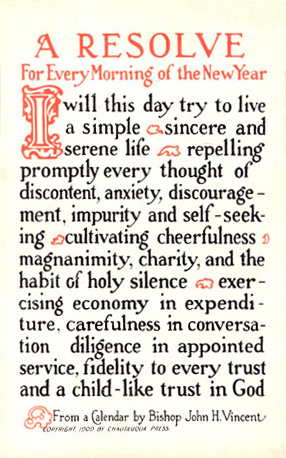
An early New Year's resolution postcard
(source: Wikipedia)
The notion of resolutions at the beginning of a New Year continued to grow and spread across countries and, by the medieval period, the last feast of Christmas meant Knights were required to take their ‘peacock vow’. By placing their hands on a peacock and vowing to continue their chivalry and commitment, they made a resolution to carry on defending their country, a pledge to their rulers and those they defended.

It is commonly thought that the first written list of resolutions to be made by one person for his own morals was made by Jonathan Edwards. An American Puritan, Edwards gradually compiled a list of around 70 resolutions over a period of two years that he aimed to commit himself to, such as ‘Resolved, always to do what I can towards making, maintaining and establishing peace’.  From here, it became more and more common for people to make promises to themselves that would improve their lives and improve their morality and at the end of the nineteenth century and the beginning of the twentieth, New Year’s Resolution postcards began to emerge, which people could send to one another informing them of the promises they had made.

By now, New Year’s Resolutions have become much more specific. Giving more to charity, losing weight and dropping bad habits are all common resolutions. But is that specificity actually useful? Richard Wiseman’s 2007 study showed that 88% of those who set New Year’s Resolutions do not succeed. Many smokers continue to smoke, many overweight people do not get any thinner, and many people who intend to ‘learn a foreign language’ get little further than ‘bonjour’ or ‘guten tag’.
 
All pessimism aside, many New Year’s Resolutions are achievable if they are realistic. Most people find it easier to set pragmatic, quantitative goals that can be reached. Rather than just the wishy-washy ‘give more to charity’, ‘become a monthly Oxfam donor’ will give conclusive results. Don’t promise to ‘give up all chocolate’, promise to ‘cut down and eat a maximum of one chocolate bar per week’. Some people are not satisfied with just marginally reducing fat intake though, and that is OK. Edwards’ resolution to ‘maintaining and establishing peace’ may have been optimistic, but why not dream big? You can still aim to become a professional footballer, or marry Harry Styles, or get into University, but maybe have a smaller-scale project on the go at the same time.

Whether making your resolutions to Janus, your superiors, God or just yourself, as long as it is something achievable, something you really want and something you are willing to work hard for, you are almost certain to achieve it.
Read More
Posted in Blog Exclusive, History, Personal, Philosophy and Religion | No comments

Wednesday, December 5, 2012

New Royal Baby: Changing the Laws of Succession

Posted on 1:48 AM by Unknown
by Ross Watkins

Royal baby on the way
(image source: radaronline.com)
On Monday, St. James’s place announced that the Duke and Duchess of Cambridge were expecting a child. This meant that there was an urgency to change the succession rights: this would mean the child of the couple would become monarch regardless of gender. Last October, at the Heads of Commonwealth meeting in Perth, Australia, new legislation was agreed by all member states, changing the law of right of succession to the throne. Since then, the government of New Zealand has been gathering formal consent letters from the 15 realms of the commonwealth. 
The new legislation would mean the end of the principle of male primogeniture, which means the male heir will not automatically take precedence over a woman in succession to the throne. This will also mean the end of a ban of succession to anybody who marries a Catholic. This is a very historic event as it will be the most drastic change to the British monarchy in a long time. But this will mean the amendment of key documents including the Bill of Rights and Coronation Oath Act of 1688, the 1701 Act of Settlement and the 1706 Act of Union with Scotland.
Queen Victoria
If one looked back into history, the ratio of queens to kings in the UK since 1066 would be 1:6 (6 queens to 35 kings). Let us use the example of Queen Victoria. At her birth, Victoria was fifth in line of succession behind her father, the Duke of Kent, and his three elder brothers: Prince George (the Prince Regent, later King George IV), Frederick, Duke of York, and William, Duke of Clarence (later King William IV). All three of her uncles died with no surviving legitimate children. This meant that she had the chance to take the throne. But if one of these men had had a child, Victoria might have never inherited the throne. In the end, Victoria proved to be one of the best monarchs Britain has ever seen and she is still the longest-reigning monarch we have ever had.

Queen Elizabeth I

One way or another the reigns of many of our queens have been the most successful of all. In the reign of Queen Elizabeth I, a secure Church of England was established, the arts flourished and her reign saw many discoveries. Also, as previously noted, there was the reign of Queen Victoria which in my view had the greatest success of all with Britain becoming the world most powerful nation and with the forging of its empire which became the biggest the world had ever seen.

"So why wasn’t the law of succession changed sooner?" I hear many of you ask.
Well it remains the fact that women haven’t had the vote for even 100 years yet (they were given the vote in 1918) and even then that was only given to women over 30 who met the minimum property qualifications. Only in 1928 were all women over the age of 21 allowed to vote. So throughout the twentieth century there were still longstanding prejudices against women.
Even with Queen Elizabeth II on the throne since 1953, change has been a long time coming; for example,  we have had only one female prime minister during all of that time. The vast majority of members of Parliament have been male, which has meant a bill has been hard to pass through a parliament full of men who may still have stood on the old views and were not welcoming of change. But with an increasing representation by women in the House of Commons and a country now more accepting of gender equality country things were going to change at one time or another.

This all means that when the child of the Duke and Duchess is born, for the first time in history, the Commonwealth can rejoice in the fact that it will know that the child will be their future monarch --- whether boy or girl.
Read More
Posted in Blog Exclusive, Current Affairs, History | No comments
Older Posts Home
Subscribe to: Posts (Atom)

Popular Posts

  • Recipe: Fifteens
     by Patrick McGuiggan The definitive Northern Ireland traybake is the ‘Fifteen’. They are so delicious I assumed that they would be fairly ...
  • Windows 8: Worth Your Money?
    by William Bates Windows 8 is the latest operation system (ie. Windows version) from Microsoft.   Installation of Windows 8 is quick and eas...
  • Review: Iron Man 3
    by Oli Price The Iron Legion (source: marvelcinematicunivese.wikia.com) It's taken me a while to write this review because I'm a b...
  • Is Conscience Innate or Learned?
    by Oliver Price (source: adorotedevote.blogspot.com) Developmental pyschologist Jean Piaget put forward the theory that conscience is learne...
  • Favourite Films: Skyfall
    by Tom Harper Upon my recent exploration of the latest movie archives I was stopped dead in my tracks by Disney and Pixar’s recent announcem...
  • Review: Tempest by Bob Dylan
    by Dave Allen ( source: rhythmcircus.co.uk ) Tempest opens with a verse of 40s-style Western Swing, pedal steel guitar and light on drum ...
  • The Genius of Leonardo Da Vinci
    by Katherine Tobin After a visit to the National Portrait Gallery to see the much anticipated Leonardo Da Vinci exhibition, I was inspired t...
  • What Do You Even Do In That Game?
    by Callum Cross That is the most asked question when you explain to someone that you play Pro Cycling Manager 2012 . As you may or may not k...
  • Portsmouth Point Poetry – Canzoniere I, 3
    Italian text Era il giorno ch’al sol si scoloraro per la pietà del suo fattore I rai, quando i’ fui preso, e non me ne guardai, ché i be’ vo...
  • Muse: The 2nd Law – Magnificence or Madness?
     by Hugh Summers (image source: crackintheroad.com) From the peaking highs of Matt Bellamy’s falsetto voice in “Survival” to the deep rumble...

Categories

  • Art and Literature (72)
  • Blog Exclusive (466)
  • Creative Writing (36)
  • Current Affairs (55)
  • Economics (12)
  • Film and Drama (62)
  • Food (12)
  • From Parents (1)
  • From Teachers (54)
  • Hackers (12)
  • History (21)
  • Language (17)
  • MUN (1)
  • Music (58)
  • Personal (45)
  • Philosophy and Religion (20)
  • Photography (66)
  • Psychology (13)
  • Science and Tech (41)
  • Sport (58)
  • Travel (14)

Blog Archive

  • ▼  2013 (346)
    • ▼  September (21)
      • Hollister : A Short Play
      • Is Bale the Real Deal?
      • Mathematical Fallacies
      • RN/RAF Summer Camp 2013
      • Review: "I Wanna Be Yours"
      • The Swedish: T/S Gunilla
      • Seafront at Sunset
      • A Response To "Why Abortion Should Not Remain Legal"
      • Why Abortion Should Not Remain Legal
      • In Defence of Warhammer (40k)
      • You’re Not Too Cool For Summer School
      • A Warning To Voters Down Under...
      • My 5 Sports-People of the Summer
      • Squirrel in the Classroom
      • Poem: By The Sea: A War’s Tale
      • Photographs: 5 Summer Beaches
      • PGS at the International Theatre Festival, Avignon
      • Photography: The Belt of Venus
      • Favourite Album: 'OK Computer' by Radiohead
      • Photograph: On Milton Common III
      • Poem for Sunday: Pevensey Beach
    • ►  August (20)
    • ►  July (43)
    • ►  June (52)
    • ►  May (42)
    • ►  April (41)
    • ►  March (42)
    • ►  February (38)
    • ►  January (47)
  • ►  2012 (153)
    • ►  December (41)
    • ►  November (48)
    • ►  October (45)
    • ►  September (19)
Powered by Blogger.

About Me

Unknown
View my complete profile