


Wednesday, July 17, 2013


Tuesday, July 16, 2013
by Tim MacBain
Well, first things first, the Australians are not to be underestimated. Frankly, if you had thought that they were down and out before the series began, you either have been living with your head in the sand for the past few years or are a complete idiot. They can score runs, not heavily yet, but glimpses, especially in the middle order of Clarke, Smith, Hughes and Haddin, of great things to come have come through. The bowling attack, although a smidgeon unreliable (as England’s first innings showed), can be rather potent, and has depth – my man to watch for is James Faulkner. If he breaks into the side, he may well be rather effective; having seen the damage his left arm pace can do in the IPL this year, he could be a real find for the Aussies. The top order, however, is fragile. Cowan failed in this Test, and Rogers is inexperienced at this level, despite a well-executed 50 in the second innings. Watson, however, showed just how important he could be for Australia’s Ashes. He may not have scored particularly freely (13 & 46 can attest to that), but his economy rates of 1.75 in the first innings and 0.73 in the second are mind-blowing. If his batting starts firing again he could swing the momentum right back in Australia’s favour.
What a Test. It really did have it all, wickets tumbling, runs scored, a great deal of controversy, stunning play, questionable decisions, and a ridiculously tight finish. So, what have we learnt, and where can both teams go from here?
 |
| James Anderson, Man of the Match |
England, although pleased to have won the Test, should be disappointed. Yet again, the top order has failed to score highly, with just one fifty and a 48 in 6 innings between Cook, Root and Trott. Our bowling was very good, as we have come to expect, but we kept putting ourselves into fantastic positions and then failing to consolidate them, the Australian first innings a perfect example of this. We could have had a first innings lead of 80 or 90 odd. We ended up 65 runs behind. It was in this position, however, that the real Man of the Match stepped up. Ian Bell’s innings was exemplary, everything you could want from a number five. Ably supported by Stuart Broad (yes, I’ll get there), he put England in the driving seat; I don’t think I heard one pundit not utter the words ‘Anything over 200 is going to be tough to reach.’ And then out steps another Aussie hero, Brad Haddin. He may have got out, but that doesn’t mean he didn’t do exceptionally well. We won by the skin of our teeth when, at 117-9 in Australia’s first innings, we should have wrapped the game up there and then.
Now we come to the others factors in the match. Yes, those ones. Chronological order places the Trott decision first. Now, I like umpires, and believe that they do a sterling job. However, Erasmus’ decision was astonishing. To give Trott out when there was still reasonable doubt and not all of the technology was available? Unthinkable. Don’t agree with his point of view at all. Maybe the fact that I’m English might have something to do with it. But still, it could easily have swung the match entirely in Australia’s favour, somewhat unfairly. Therefore, the Broad decision, as horrifically inaccurate as it was, put England on a little more of a level pegging; if you had asked the Aussie’s which, out of Broad or Trott, they would have preferred to have been given out, Trott would have been the answer every time. And, to add my opinion to the massive debate raging about whether Broad should have walked, I go with everybody aside from Jonathan Agnew in saying that he was right not to have walked. Agnew’s claim that it became ‘an issue for the spirit of the game’ (BBC) is unfathomable; cricket is firstly a competitive game in which both sides want to win, but without cheating or breaking any rules; Broad did neither of those things, and thus kept within the spirit of the game. This isn’t the 1890s anymore. What the Broad Incident showed us is that Australia don’t use their reviews very well. They use them up on key batsmen, not key moments in the game, which is something that they will want to address quickly.
Finally, a mention has to be reserved for the pitch. Evidently it was quite hard to bat on, for both teams, but that in many ways made the match even more interesting, with turn for Swann and Agar, and movement for the likes of Anderson (who was exceptional even though he wasn’t my Man of the Match) and Broad.
So, where does this leave us? A wounded Australia, a pleased but worried England. Dangerous for us England fans, if I’m honest with you. If I were Darren Lehmann, I would be looking to the future, not just the second test, but those beyond it; maybe it would be time to consider recalling Simon Katich? Proven at international level, he’s doing well at for his county this year. This could result in the partnership of Clarke and Katich, one to send a chill down any English spine. If Starc fails to perform at Lord’s, give Faulkner a go at Old Trafford, and keep Peter Siddle as healthy as is humanly possible; without him Australia will begin to struggle. For Andy Flower, DROP JONNY BAIRSTOW NOW. I think he’s a wonderful player, but is consistently underperforming. Move Root down the order, open with Cook and Compton. Then we’ll have them… Bring on Lord’s!
Read Sampad Sengupta's analysis of the Ashes' First Test here.
Read Sampad Sengupta's analysis of the Ashes' First Test here.
Monday, July 15, 2013
by Sampad Sengupta
 |
| Victorious England celebrate |
Wickets tumbling, runs scored, records broken and to add to all that, some controversy, that’s all you can ask for in a game of cricket and the first Ashes test of 2013 didn’t disappoint. It was a fight to the finish in the first test match at Trent Bridge as England came out on top beating arch rivals Australia by 14 runs on the final day. The match was a brilliant advert for the longer format of the game which many consider to have lost its charm.
The headlines in the build-up to the series were dominated by the return of England ’s star batsman Kevin Pietersen and also by the appointment of Darren Lehmann as Australia ’s head coach. The Australian team, very much a team in transition and struggling to find stability, had plenty of changes in the dressing room with the arrival of new players and personnel. This was highlighted in their team selection for the first test where they dropped established players like David Warner and Nathan Lyon and brought in 19-year old debutant Ashton Agar. The England side was much more predictable with the only notable change being that of Joe Root opening the batting alongside captain Alastair Cook. England won the toss and chose to bat and soon found themselves in trouble as they got bowled out for a meagre 215, Peter Siddle being the pick of the Australian fast bowlers, picking up 5 wickets. Australia too did not find it easy to score runs after a shaky start and thanks to some good knocks in the middle order and a record breaking innings of 98 (off 101 balls) from No. 11 Ashton Agar, they reached a total of 280. Agar’s score was the highest by any No.11 batsman in Tests. His innings was that of class and he played a brand of fearless cricket showing no signs of being nervous playing his first Ashes test.
 |
| Ashton Agar |
Read Tim McBain's response to the Ashes' First Test here.
Friday, July 12, 2013

Wishing all of our editors, contributors and readers a wonderful summer break. Portsmouth Point will continue blogging (albeit on a lighter, more summery basis) during late July and August, so do continue to visit us.
Thanks to Oliver Stone for this lovely holiday image of beach huts at West Wittering.
Thursday, July 11, 2013
Part 3 of 3 rock opera-related articles by Tim Bustin
 The term opera brings to mind vast theatres, over-singing and several large dollops of pure boredom, but really it’s a term used to describe where a (usually long) piece, or collection of musical pieces, are used as a way of storytelling. Way back in 1966, the story goes something like this: The Who’s lead guitarist and primary songwriter, rock legend Pete Townshend, was joking around one evening with one of the band’s managers, Kit Lambert (son of Constant Lambert, the composer) and some friends, listening to all sorts of different rubbish music, when, fairly drunk, a comedy song made someone shout out “It’s rock opera!”
 A young boy, born as WW1 concludes with his father missing in action, becomes deaf, dumb and blind when he witnesses his returning father murdering his wife’s new lover. The boy’s parents attempt to cure his psychological issues, as Tommy lives in a vibration world, reaching a sort of enlightenment. Finally cured, after abuse which he never knew occurred, he tries to teach others of his ways, though is ultimately rejected, due to human propensity for greed and their inability to sacrifice desires. Now, granted, it sounds more pretentious than forty years of Yoko Ono, but the brilliance of Tommy is that the lyrics never detract from the power of the music: Roger Daltrey’s singing verges between beauty and ferocity, Moon’s drumming is as hell-bent as ever, whilst Townshend’s sublime guitar with matching Entwistle bass produces an album of supreme quality, which turned The Who’s fortunes around overnight, established Townshend as a composer, not a mere songwriter, and paved the way for others to create classic albums. (Tommy is 96th on Rolling Stone’s 500 Greatest Albums of All Time list).
 So many albums in the rock opera format have been released now, it’s hard to keep track. The next notable one was in 1979, Pink Floyd’s The Wall (87th on Rolling Stone), looking at the barrier that exists between audiences and musicians, and the hits “Comfortably Numb” and “Another Brick In The Wall (part 2)” were spawned. From here albums weren’t hugely successful, and whilst concept albums were rife, it wasn’t until 2004 that we saw a re-emergence of opera in rock form. American Idiothas a sound that couldn’t be further from pretension, even if it’s lyrics are politically motivated, but Green Day’s creation is in every respect a punk masterpiece – from the simple beauty of “Wake Me Up When September Ends” to the raw chords of the title track; the punchy “Holiday” to the ten minute epic “Jesus of Suburbia” and of course the classic “Boulevard of Broken Dreams” – every second is power or serenity. It’s interesting to note how similar the album is to the two Who rock operas – the tale is of an anti-hero Jesus of Suburbia (an opposite Tommy?), hating and confused by life (like Jimmy), meets punk revolutionary St. Jimmy (definite reference), who eventually dies metaphorically, representing that loss of ideals for JoS’s mind. The album is obviously Who-inspired and is utterly brilliant to listen to (225th on Rolling Stone).
The term itself sounds like an oxymoron, implying both a combination of “cool” and pretension (whilst also not clarifying what on earth it is). David Bowie’s (The Rise and Fall of) Ziggy Stardust and the Spiders From Mars, The Who’s Tommy and Quadrophenia, Green Day’s American Idiot, Jesus Christ Superstar, Pink Floyd’s The Wall – indisputable classics all of them, and each structured around some epic tale – music, exploited in its induction of emotions, used in connection with the lyrics to tell a story.
Quite surprisingly, one bout of hysterics later, Kit remarked “That’s not a bad idea” So, in order to fill a missing nine minutes at the end of their 1966 A Quick One album, the world’s first rock opera emerged – A Quick One While He’s Away, the mini rock opera. It’s a rather strange story, about infidelity between a forlorn girl guide and an engine driver named Ivor. Yeah, I know. And of course, being at that difficult second album stage, they just said “cello” over and over again to save money on hiring a strings section. It’s a pretty good song actually, despite certain, unimportant, details. Split into six sections, it’s a fast moving tale of love, emotion, youth, sex, and ultimately forgiveness. Not necessarily a noble start for this well-used song/album format, but, trust me, it gets better.
The Who tested the mini-rock opera idea again on their third album, The Who Sell Out. At this time, finance was an issue, and apparently the band’s rhythm section (if it can be called that), drumming icon Keith Moon and hugely influential bassist John Entwistle, were flirting with the idea of going off and joining this new band called (christened by Moon) "Led Zeppelin". Townshend meanwhile was becoming obsessed with the idea of a rock opera album. Tommy is a complex and compelling story dealing with murder, trauma, bullying, child abuse, sex, drugs, illusion, delusion, altered consciousness, spiritual awakening, religion, charlatanism, success, superstardom, faith, betrayal, rejection and pinball.
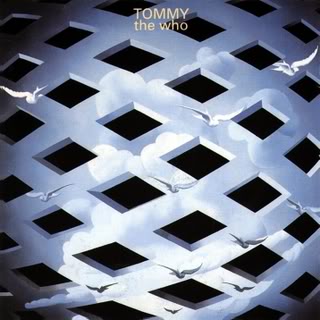
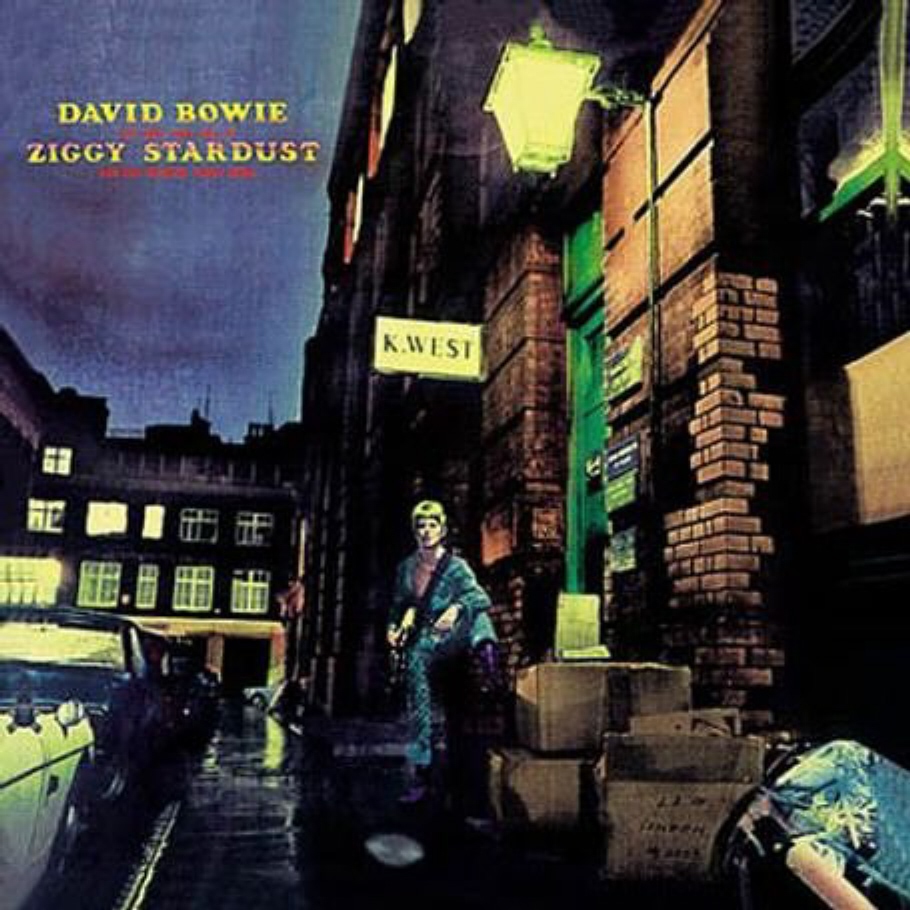
This was in 1969, and it was only next year when the album version of Jesus Christ Superstar (by Andrew Lloyd Webber and Time Rice) was released (turned into a stage production in 1971). But it was when David Bowie decided to attempt launched his own rock-opera masterpiece, with his outrageous alter-ego Ziggy Stardust that the rock opera really kicked off. Bowie’s “Ziggy” character is iconic to say the least; flamboyantly dressed and sexually promiscuous. It was Bowie’s lust for fame and attention that allowed such a creation to exist, and to give the character extra depth, the story of Ziggy Stardust was written – a ludicrous, “far out” idea, Ziggy is the messenger for inter-dimensional beings, getting out his ideas through the medium of rock and roll, in a time where people have lost hope and faith, with the ending of Earth being nigh due to man’s exploitation of the world’s resources. Eventually, the travelers (or “infinites”) arrive and take pieces of Ziggy to better integrate with human beings, killing him. Parallels with Tommyare obvious – worship, suffering, the hero’s downfall – yet the music is nowhere near, except in genre. Bowie’s rock songs sometimes sound mild, though the overall product is of course fantastic, with that same distinctive voice carrying the tunes, a solid backing band producing music that’s hard to not want to hear. And now, rock opera had two amazing, equally accomplished, pieces of work, and it had been proved that this genre could be used for great results. (The Rise and Fall of Ziggy Stardust and the Spiders From Mars is 35th on Rolling Stone’s 500 Greatest Albums of All Time list).

1973 saw The Who, now fathers of a new genre, release their second rock opera, Quadrophenia. It’s a part documentary of 1960s Mod culture (exploring its fashions, ideals, “way of life”), told through the life of a young Mod named Jimmy, struggling to adhere to the rules of his lifestyle, fighting with rival gang the Rockers, while he attempts in vain to find love and discover who he truly is amongst his four-way personality split (each personality representing a member of The Who – hence he is quadrophenic). The music is vastly complex, the two 6-minute instrumentals, for example, being combinations of the four themes of Quadrophenia (leitmotifs), conjuring imagery to fit the parts of the story with intense effect, whilst the other 15 songs swing wildly from hard rock to sweet-sounding depression. Townshend himself regarded it as his finest work and Quadrophenia is arguably better than Tommy, though less influential. Both were turned into films, with 1975’s artsy Tommy film, starring a whole host of famous actors and musicians, while 1979’s Quadrophenia film became a cult classic, as an accurate look at 1960’s Britain via Jimmy’s struggle to fit by being an individual. (Quadrophenia is 267th on Rolling Stone’s list; for more information on Quadrophenia, read my review of the recent concert at the O2, or check out this term’s 'Fight Club' issue of Portsmouth Pointmagazine.

Despite Green Day’s second rock opera, the much softer, yet still primarily punk based, 21st Century Breakdown being successful, American Idiot is, so far, the last rock opera “great”. It seems unquestionable that eventually someone else will follow suit and give the world another rock opera, though it may be in the form of a punk or metal rock opera, or another yet untested form. But to a genre, really a sub-genre, which is normally unheard of or not understood, there have been an amazing number of staggeringly brilliant albums produced. It’s a chance for the lyrics to become important, for musicians to become storytellers and to show their opinions through something more powerful than words alone – to fuse a tale, a lyric, an idea, with truly expressive music and create something so powerful, and something that is much more of a statement than the sum of its carefully constructed story, and of its, in whatever style, emotive and wonderful music.
Wednesday, July 10, 2013
Released in 1973, 'Quadrophenia' has become one of The Who’s greatest albums. A “rock opera”, the music tells the story of mod culture in early 1960s Britain

'Quadrophenia' hasn’t been played in its entirety since 1997, discounting a one-off 2010 performance for the Teenage Cancer Trust, but its fans haven’t lost any of its spirit; Pete Townshend (Who lead guitarist and songwriter) himself confessed it to be his finest work, surpassing (in his mind) even such classics as Tommy and Who’s Next?And with fans eager to hear this epic composition, whether because of the sheer brilliance of the music or because of the story of the “rock opera” of Jimmy, the Mods and “a way of life”, or because they’re new fans (like myself) who want to hear the remains of this amazing band before Townshend goes deaf and Roger Daltrey’s voice crackles and fades away, or simply because they’re die-hard Who fans, it was only a matter of time before a 'Quadrophenia' tour had to be done.
Blues-pelting warm-up band Vintage Trouble did a superb job of getting the already-excited crowd into a wild frenzy, with an impossibly good James Brown sound-alike fronting cool rifts and action-packed drums and bass. It took the first faint sounds of “I Am the Sea” to calm everyone into their seats. Traces of crashing waves and a rainy street in background to the four "themes” of 'Quadrophenia' held us in anticipation, until finally on Daltrey’s cry of “Can you see the real me?” the music exploded into our ears; the melody created by the heavy bass of Pino Paladino took lead, supported by the crazed drumming of Scott Devours (filling for regular drummer Zak Starkey, Ringo Starr’s son), a blaze of horns and subtle piano, all essentially backing to Townshend’s power guitar and Daltrey’s scream, showing they really have still got it. The energy emanating from the stage seemed for all to almost equal the power The Who possessed as a live band in the 70s.
Of course, The Who never would be the same without the chaotic genius of Keith Moon “The Loon” or the unbelievable talent of John “Thunderfingers” Entwistle (although we were treated to a staggering bass solo on the song “5:15”, complete with video footage (see below) showing Entwistle standing almost perfectly still (“The Ox”) except for his fingers, which moved with incredible speed), but that didn’t mean The Who still didn’t go full out on the performance; Daltrey swung his microphone, as Townshend did his signature “Windmill Strum”, though there was no smashing of guitars or blowing up of drum kits. The two instrumental pieces were performed beautifully, surprising given their intense complexity and use of synthesisers. The whole performance was a masterpiece reborn, the story played out in the background on video screens, all of the musicians working perfectly with one another (including Pete’s brother, Simon), bringing a classic back to life. Even after getting through the whole album they kept on going to play some of their greatest hits, only pausing in between for a bit of stage banter and to announce it was “Karaoke time!”. “Who Are You” got a full 20,000 people singing their hearts out, “Pinball Wizard” showed the Kaiser Chiefs how they should’ve performed it at the Olympic closing ceremony, whilst “Baba O’Riley’s” beautiful mix of synthesisers, acoustic and electric, drums and piano wasn’t lost – the video screen displaying in bright green the phase “Teenage Wasteland” for all to sing in its serenity – whilst Daltrey replaced the violin solo with a stunning rendition on harmonica. The activity escalated to the power anthem of “Won’t Get Fooled Again”, climaxing after eight minutes on Daltrey’s scream. And, although “My Generation” didn’t get played, the final song was perhaps the most elegant and wondrous of them all: simply Daltrey and Townshend, the final two, Townshend on acoustic guitar, Daltrey singing a song of beauty, pain, loss and the effects of time. “Tea and Theatre”, from their 2006 top-ten album Endless Wire, recounts the end of a tale: “The story is done - 's getting colder now/A thousand songs - still smoulder now/We played them as one - we're older now”. 'Quadrophenia', after all, was written years after the end of Mod culture in
For more information on Quadrophenia, look out for my article in the Portsmouth Point: Fight Club magazine, issued at the end of term
Tuesday, July 9, 2013


Subscribe to:
Posts (Atom)


